
Ground leveling is the first and crucial step in the construction process. Leveling is crucial to the creation of an even, stable construction site, ensuring the construction of subsequent projects. Together with TPA Incons, let us explore leveling procedures in construction.
Step 1: Cleaning up the worksite
The first task you need to do is clear the worksite of all obstacles including trees. Worksite can be cleared by burning or tidying up.
Step 2: Removing the upper layer of soil
When leveling, it is essential to remove the top layer of soil that is packed with gravel, trash, plants, among others. Then, you must make sure that drainage measures are in place to free up the entire construction surface.
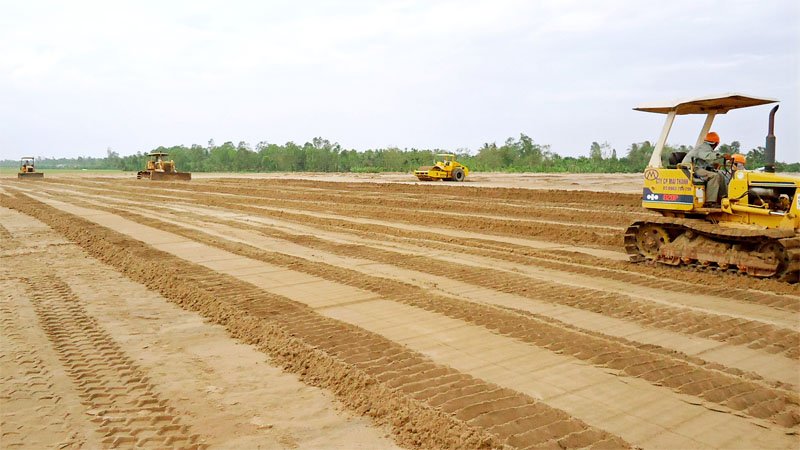
Photo source: internet
Step 3: Digging the soil
When digging, you have to make sure the depth matches the drawing and consider the homeowner’s financial situation as well. For instance, you can either use specialized materials or relocate the rock layer if its hardness makes it difficult to remove. As for regular soil, carry on as normal.
Step 4: How to backfilling?
When it comes to backfilling during the leveling process, you need to ensure that all backfilling is completed including foundation and filling the toe of slope. Moreover, remember not to backfill anywhere without the investors’ permission and inspection. Additionally, it is necessary to remove soil from areas with porous or easily eroded soil and perform backfilling upon the investor’s request.
Step 5: Compacting
To assure that the leveling process takes place smoothly and safely, you must pay attention to the compacting. Firstly, check the rolling diagram, the rolling labor as well as the operating features of the equipment. And remember to make sure that the material is well-dispersed and has adequate moisture control before compacting.
When compacting, you must follow the process while continuously ensuring the layer thickness as well as the number of compacting. And before reverse compacting, the compacting layer must be raked on the surface using the most specialized methods.
Step 6: Drainage trench building
Construction drainage trench will be placed along the edge of the floor area, the best spacing is about 3m from the edge of the floor. The entire trench system mentioned above is primarily used for foundation work during the construction process. Later on, it can be used as a sewer for the house.
Step 7: Inspecting and accepting
Examine the foundation’s horizontal and vertical slope, the foundation’s height, the quality of backfilling as well as the weight of dry volume, vertical size. Remember to pay attention to these matters and check them carefully to make sure the leveling process is performed properly.
You should make some above-mentioned considerations and preparations before leveling the ground. Carefully prepare so that you can fulfill your task flawlessly.
